From Plant Biology to Human Health
The Potential of Sauropus androgynus (L.) Merr. in Supporting the Prevention and Control of Iron Deficiency Anemia in Vietnamese Children.
Independent Researcher & Author | September–October 2025
Research Overview
This independent literature review explored the nutritional composition and reported biological properties of Sauropus androgynus (rau ngot), examining its potential role in food-based approaches to iron deficiency anemia among Vietnamese children.
By reviewing evidence from scientific publications, nutritional studies, animal experiments, and human case reports, I examined the opportunities and limitations of translating plant-based nutritional research into public health recommendations.
The review also highlighted the importance of distinguishing traditional dietary practices from scientifically established health benefits. Particular attention was given to the bioavailability of iron, the factors influencing iron absorption, and the potential risks associated with excessive consumption of S. androgynus. This analysis helped develop a more balanced understanding of how locally available foods may contribute to children’s nutritional well-being while emphasizing the need for further research before making specific dietary or clinical recommendations.
Research Focus
* Nutritional composition and reported biological properties of Sauropus androgynus
* Biological mechanisms associated with iron deficiency anemia
* Available scientific evidence on plant-based nutritional applications
* Limitations, safety considerations, and implications for public health.
What I Learned This project introduced me to the importance of evaluating scientific evidence critically, recognizing limitations, and distinguishing promising research questions from established health recommendations.
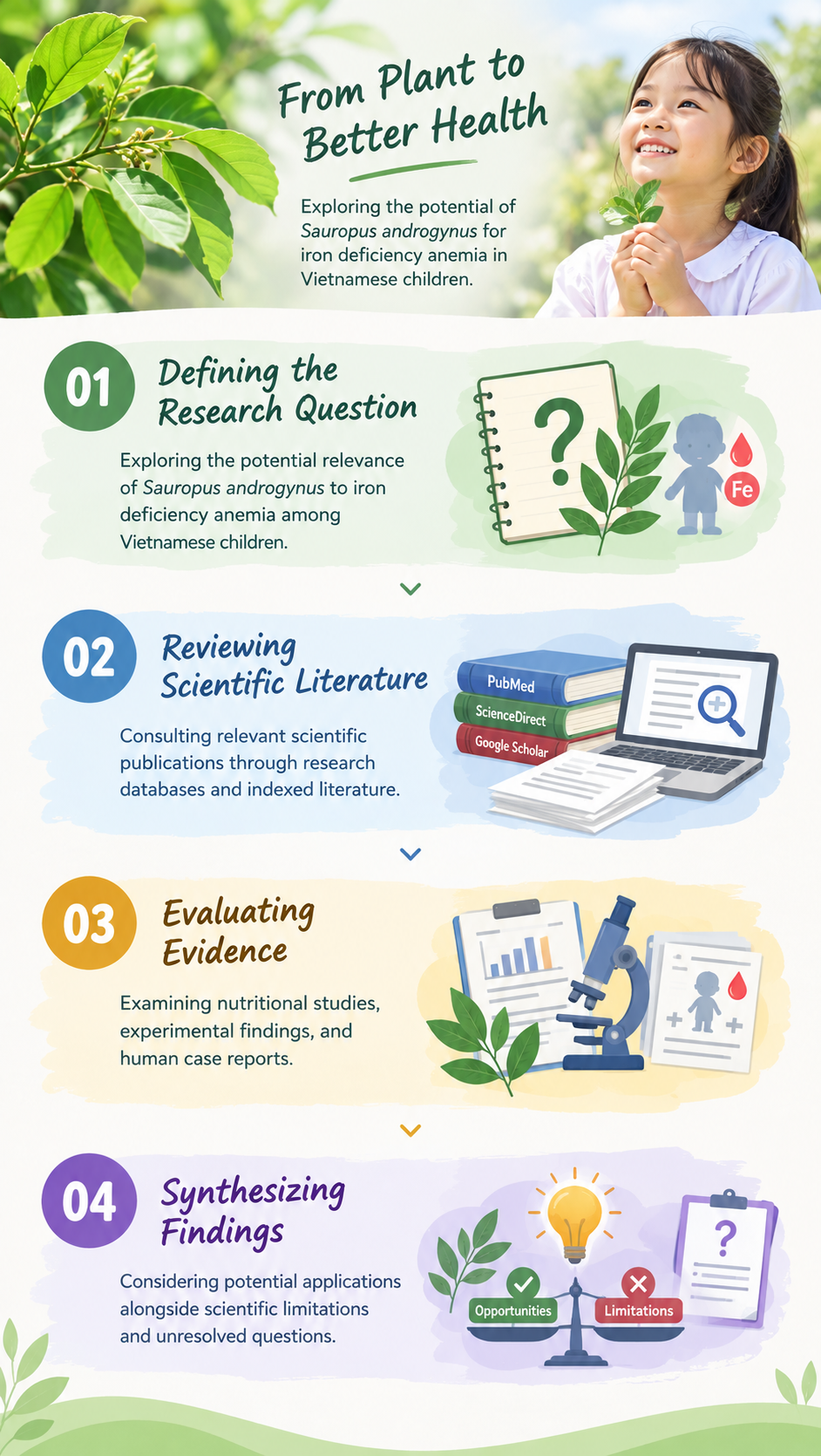
My Research Process
01 — Defining the Research Question
Exploring the potential relevance of Sauropus androgynus to iron deficiency anemia among Vietnamese children.
02 — Reviewing Scientific Literature
Consulting relevant scientific publications through research databases and indexed literature.
03 — Evaluating Evidence
Examining nutritional studies, experimental findings, and human case reports.
04 — Synthesizing Findings
Considering potential applications alongside scientific limitations and unresolved questions.